
Moroccan Municipalities Taking Proactive Steps for Climate Change and Sustainable Development
 Morocco is facing severe water scarcity, a decline in the agricultural sector, and rising sea levels. Even though the country contributes only 0.18% to global greenhouse gas emissions, the impacts of climate change in Morocco are notably significant. These challenges have had a major impact on the economy, particularly affecting 90% of the country's businesses, most of which are micro, small, and medium-sized enterprises (MSMEs).
However, Morocco is actively responding to these challenges. The country is taking proactive measures to adapt to and mitigate the effects of climate change at both national and local levels.
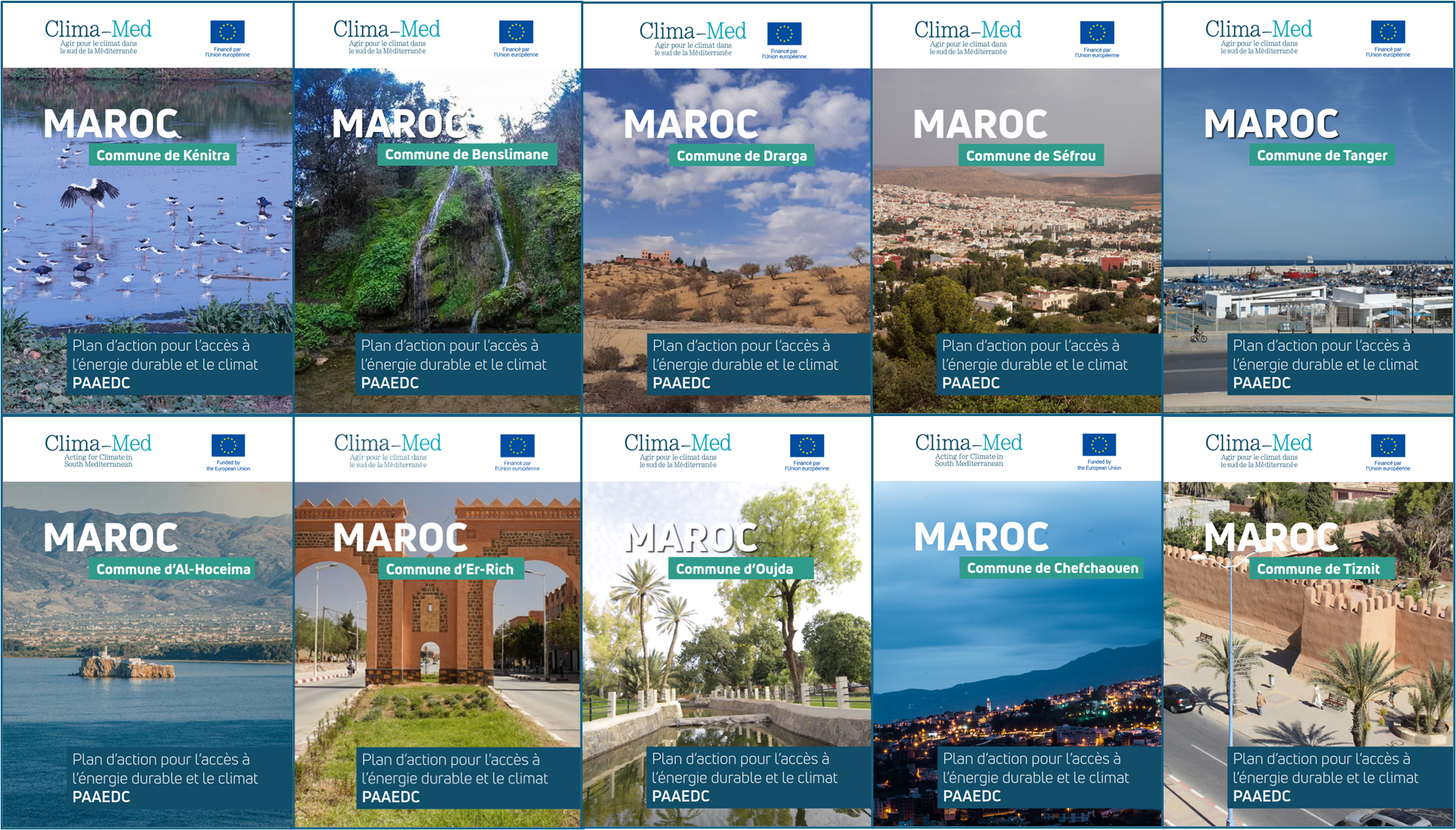
Ten municipalities have joined the Covenant of Mayors for the Mediterranean (CoM Med) and have developed their Sustainable Energy Access and Climate Action Plans (SEACAPs) with the continuous support of the Clima-Med Project. These municipalities include Al Hoceima, Er Rich, Chefchaouen, Sefrou, Tangiers, Kénitra, Benslimane, Tiznit, Oujda, and Drarga.
They have made significant progress in preparing their SEACAPs, demonstrating their commitment to addressing climate change and reducing greenhouse gas emissions with clear objectives and targets.
With their specific and concrete actions such as promoting renewable energy, implementing water conservation measures, and improving agricultural practices, The SEACAPs provide a clear roadmap for the future.
They will help the municipalities achieve their goals of becoming low-carbon, sustainable cities by defining a strategic framework for the development and implementation of energy and climate policies at the municipal level as well as adapting to the effects of climate change and create a dynamic between the various stakeholders around the measures and actions identified in the action plan.
Morocco has also strengthened its international cooperation, particularly with the European Union, through the EU-Morocco Green partnership "Partenariat Vert." This initiative, considered the first between the EU and a non-European country, focuses on accelerating the green transition, supporting renewable energy development, and fostering sustainable economic growth.
The Clima-Med Project's role is ongoing and comprehensive. It provides necessary technical assistance and capacity building and helps municipalities take concrete steps toward a greener future, aligning their actions with national and international climate objectives.
Les municipalités marocaines prennent des mesures proactives pour lutter contre le changement climatique et promouvoir le développement durable
Le Maroc est confronté à une grave pénurie d’eau, au déclin du secteur agricole et à l’élévation du niveau de la mer. Bien que le pays ne contribue qu’à hauteur de 0,18 % aux émissions mondiales de gaz à effet de serre, les impacts du changement climatique au Maroc sont particulièrement importants. Ces défis ont un impact majeur sur l’économie, affectant 90 % des entreprises du pays, dont la plupart sont des micro, petites et moyennes entreprises (MPME).
Cependant, le Maroc répond activement à ces défis. Le pays prend des mesures proactives pour s’adapter au changement climatique et en atténuer les effets, tant au niveau national que local.
Dix municipalités ont rejoint la Convention des maires Méditerranée (CdM Med) et ont développé leurs Plans d’action pour l’accès à l’énergie durable et le climat (PAAEDCs) avec le soutien continu du projet Clima-Med. Ces municipalités comprennent Al Hoceima, Er Rich, Chefchaouen, Séfrou, Tanger, Kénitra, Benslimane, Tiznit, Oujda et Drarga.
Elles ont réalisé des progrès considérables dans la préparation de leur PAAEDCs, démontrant ainsi leur engagement à lutter contre le changement climatique et à réduire les émissions de gaz à effet de serre grâce à des objectifs et des cibles clairs.
Avec leurs actions spécifiques et concrètes telles que la promotion des énergies renouvelables, la mise en œuvre de mesures de conservation de l’eau et l’amélioration des pratiques agricoles, les PAAEDCs fournissent une feuille de route pour l’avenir.
Ils permettront aux municipalités d’atteindre leurs objectifs de devenir des villes durables à faibles émissions de carbone en définissant un cadre stratégique pour l’élaboration et la mise en œuvre de politiques énergétiques et climatiques au niveau municipal, ainsi qu’en s’adaptant aux effets du changement climatique, et en créant une dynamique entre les différentes parties prenantes autour des mesures et des actions désignées dans le plan d’action.
Le Maroc a également renforcé sa coopération internationale, notamment avec l’Union européenne, à travers le Partenariat Vert entre l’UE et le Maroc. Cette initiative, considérée comme la première entre l’UE et un pays non européen, vise à accélérer la transition écologique, à soutenir le développement des énergies renouvelables et à favoriser une croissance économique durable.
Le rôle du projet Clima-Med est continu et global. Il fournit l’assistance technique et le renforcement des capacités nécessaires et aide les municipalités à prendre des mesures concrètes pour un avenir plus vert, en alignant leurs actions sur les objectifs nationaux et internationaux en matière de climat.
البلديات المغربية تتخذ خطوات استباقية في مجال تغير المناخ والتنمية المستدامة
يواجه المغرب ندرة شديدة في المياه، وتراجعًا في القطاع الزراعي، وارتفاعًا في مستويات سطح البحر. ورغم أن البلاد تساهم بنسبة 0.18% فقط في انبعاثات الغازات المسببة للاحتباس الحراري على مستوى العالم، إلا أن تأثيرات تغير المناخ في المغرب كبيرة بشكل ملحوظ. وقد كان لهذه التحديات تأثير كبير على الاقتصاد، وخاصة على 90% من شركات البلاد، ومعظمها من الشركات الصغيرة والمتوسطة والصغيرة جدًا.
ومع ذلك، يستجيب المغرب بنشاط لهذه التحديات، حيث يتخذ تدابير استباقية للتكيف مع آثار تغير المناخ والتخفيف منها على المستويين الوطني والمحلي.
انضمت عشر بلديات إلى ميثاق رؤساء مدن البحر المتوسط (CoM Med) وقامت بتطوير خطط عمل الوصول للطاقة المستدامة والمناخ (SEACAPs) بدعم مستمر من مشروع كليما – ميد. وتشمل هذه البلديات الحسيمة والريش وشفشاون وصفرو وطنجة والقنيطرة وبن سليمان وتزنيت ووجدة ودراركة.
وقد أحرز المغرب تقدماً كبيراً في إعداد SEACAPs الخاصة بهم، مما يدل على التزامهم بمعالجة تغير المناخ والحد من انبعاثات الغازات المسببة للاحتباس الحراري بأهداف وغايات واضحة.
ومن خلال إجراءات محددة وملموسة مثل تعزيز الطاقة المتجددة، وتنفيذ تدابير الحفاظ على المياه، وتحسين الممارسات الزراعية، توفر خطط عمل الوصول الطاقة المستدامة والمناخ خريطة طريق واضحة للمستقبل.
وسوف يساعدون البلديات على تحقيق أهدافها في التحول إلى مدن مستدامة منخفضة الكربون من خلال تحديد إطار استراتيجي لتطوير وتنفيذ سياسات الطاقة والمناخ على المستوى المحلي، فضلاً عن التكيف مع آثار تغير المناخ وخلق ديناميكية بين مختلف أصحاب المصلحة حول التدابير والإجراءات المحددة في خطة العمل.
كما عزز المغرب تعاونه الدولي، لاسيما مع الاتحاد الأوروبي، من خلال الشراكة الخضراء بين الاتحاد الأوروبي والمغرب "الشراكة الخضراء". وتركز هذه المبادرة، التي تعتبر الأولى بين الاتحاد الأوروبي ودولة غير أوروبية، على تسريع التحول الأخضر ودعم تطوير الطاقات المتجددة وتعزيز النمو الاقتصادي المستدام.
إن دور مشروع كليما – ميد مستمر وشامل. فهو يوفر المساعدة الفنية اللازمة وبناء القدرات ويساعد البلديات على اتخاذ خطوات ملموسة نحو مستقبل أكثر اخضرارًا، ومواءمة إجراءاتها مع الأهداف المناخية الوطنية والدولية.