
Clima-Med workshop in Morocco on the SEACAPs optimisation and funding tools
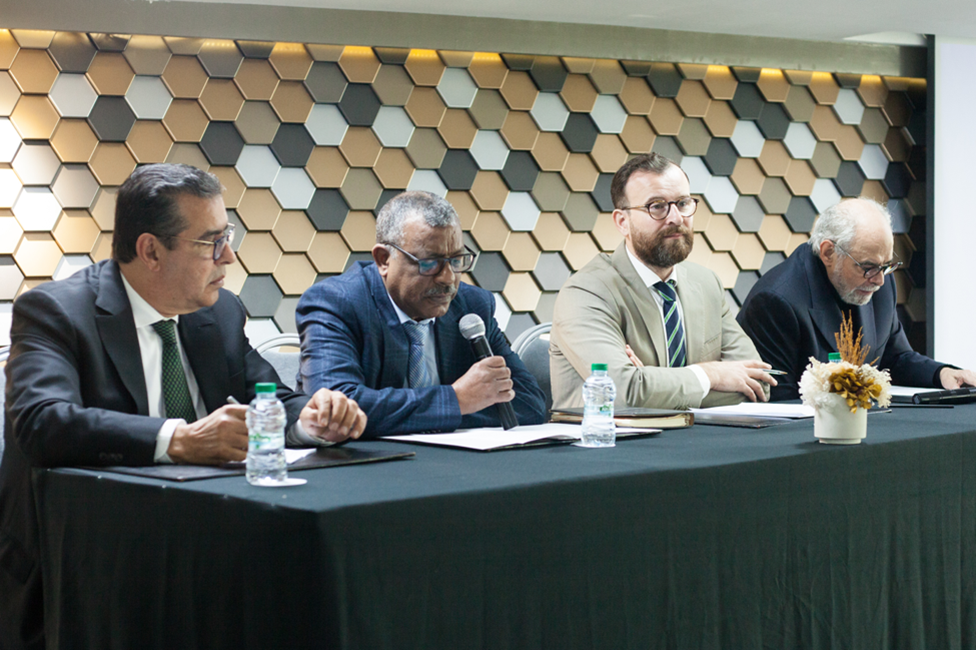 On March 6th and 7th, the Clima-Med project, funded by the EU, initiated a two-day workshop in Rabat where the project's outputs and deliverables were presented, and their use and sustainability were discussed and promoted. The event was supported by the presence of Mr Jean Francois Moret from the EU Delegation in Morocco, the representative of the Ministry of Energy Transition and Sustainable Development, Mr Mustapha Bendehbi,the President of the municipality of Salé and member of the executive council of the Moroccan Association of Presidents of Communal Councils, M. Omar Sentissi.
Representatives from more than 15 municipalities, Unions of municipalities, and several officials and associations joined to gain practical knowledge on preparing and implementing SEACAPs in the communes and understanding the available financing mechanisms to facilitate their access to essential financial resources.
In welcoming words, Mr Moret highlighted the EU-Morocco Green Partnership, which embodies the natural framework for implementing the SEACAPs concretely. He insisted on the EU Delegation's availability in Morocco to use the European toolbox (bilateral cooperation, access to financing) and regional initiatives such as the Covenant of Mayors for the Mediterranean (CoM Med).
“This workshop comes in a very particular situation of climate change that our planet is experiencing,” said Mr Sentissi, “hence the importance of this event in providing us with useful tools for our cities in terms of access to energy and sustainable development and capitalising on the outputs of the Clima-Med Project”.
On the first day, the Clima-Med team kicked off the workshop with a presentation of the project's activities and deliverables, such as the Climate Action Strategy (CAS), the Sustainable Energy Access and Climate Action Plans (SEACAPs) prepared jointly with ten communes, and a SEACAP Preparation Manual. This newly developed and valuable tool provides detailed guidance for developing comprehensive plans and their communication component. Participants were also introduced to CoM Med, its objectives, pillars, and reporting platform.
The communes of Kenitra and Chefchaouen shared their successful examples and challenges while preparing these Plans with the audience.
Consolidation work was then carried out in an interactive format involving several groups, with participants engaged in four thematic points. Each group developed a draft roadmap that addressed a specific climate problem and proposed related solutions. Moreover, the ten partner cities of the Clima-Med project will further develop the objectives identified during the workshop and list the adaptation actions they intend to plan to achieve.
Mr Bendehbi welcomed Clima-Med's learning-by-doing approach, which involved the communes' active participation. He said that “this project has benefited government bodies, mainly local authorities, providing an opportunity to strengthen climate change governance and to develop the SEACAPs”.
On day 2, the presentation of the Climate Finance Guidebook and the methods of financing local actions prepared by the project team generated an enriching debate that revolved mainly around i) the lack of budget allocated to pre-feasibility studies necessary for the maturation of some municipal projects, ii) access to funding and iii) the critical need for support in the planning of SEACAPs which could include training, technical advice, and access to specialised resources, capacity-building workshops, integrating concrete case studies.
Continuing this workshop, the project team will accompany each of Marrakech and Figuig municipalities to prepare special SEACAPs on “the preservation of the medina and its heritage” and “the conservation of the Oasis”, respectively.
It will support the demands that surfaced during the workshop, namely providing technical support and capacity-building in the preparation of the new municipalities’ SEACAPs, establishing the SEACAP Support Mechanism to solve the governance problem at the municipal level, the adhesion of new municipalities to CoM Med, and the identified objectives.
Atelier du projet Clima-Med au Maroc autour des outils d’optimisation et de financement du PAAEDC
Les 6 et 7 mars derniers, le projet Clima-Med, financé par l’UE, a organisé un atelier de deux jours à Rabat, au cours duquel les résultats et les livrables du projet ont été présentés, et leur utilisation et leur pérennité ont été discutées et promues. L’événement a été rendu possible par la présence de M. Jean François Moret de la Délégation de l’UE au Maroc, le représentant du Ministère de la Transition énergétique et du développement durable, M. Mustapha Bendehbi, ainsi que du Président de la commune de Salé et membre du conseil exécutif de l’Association marocaine des Présidents des Conseils Communaux, M. Omar Sentissi.
Des représentants de plus de 15 municipalités, d’unions de municipalités et d’associations se sont réunis pour acquérir des connaissances pratiques sur la préparation et la mise en œuvre des PAAEDCs dans les communes et comprendre les mécanismes de financement qui existent afin de faciliter leur accès aux ressources financières clés.
En guise de bienvenue, M. Moret a mis l’accent sur le partenariat vert UE-Maroc, qui incarne le cadre idéal pour la mise en œuvre concrète des PAAEDCs. Il a insisté sur la disponibilité de la Délégation de l’UE au Maroc pour l’utilisation d’une boîte à outils européenne (coopération bilatérale, accès au financement) et les initiatives régionales telles que la Convention des Maires pour la Méditerranée (CdM Med).
« Cet atelier intervient dans un contexte très particulier de changement climatique que connaît notre planète », a déclaré M. Sentissi, « d’où l’importance de cet événement pour fournir des outils pertinents à nos villes en termes d’accès à l’énergie et de développement durable et pour tirer pleinement parti des livrables produits par leprojet Clima-Med".
L’équipe du projet Clima-Med a donné le coup d’envoi de la première journée del’atelier en présentant les activités et les résultats du projet, notamment la stratégie d’action climatique (CAS), les plans d’accès à l’énergie durable et d’action pour le climat (PAAEDC) préparés conjointement avec dix communes, et un manuel de préparation des PAAEDCs. Cet outil précieux, récemment mis au point, fournit des conseils détaillés pour pouvoir créer des plans d’ensemble et leur volet communication. Les participants ont également été initiés à la CdM Med, à ses objectifs, à ses piliers et à sa plateforme de reporting.
Les communes de Kénitra et Chefchaouen ont partagé avec le public leurs exemples de réussite et les défis auxquels elles ont été confrontées lors de la préparation des Plans.
Le travail de renforcement s’est ensuite déroulé selon un format interactif impliquant plusieurs groupes, mobilisant les participants sur quatre points thématiques. Chaque groupe a élaboré un projet de feuille de route traitant d’une problématique climatique spécifique et en proposant des solutions connexes. En conséquent, les dix villes partenaires du projet Clima-Med ont prévu de développer les objectifs identifiés lors de l’atelier et dresseront la liste des actions d’adaptation qu’elles ont l’intention de mettre en œuvre.
M. Bendehbi a salué l’approche d’apprentissage par la pratique prônée par Clima-Med qui implique la participation active des communes. Il a déclaré que « le projet a bénéficié aux organismes gouvernementaux, principalement aux autorités locales, en leur donnant la chance de renforcer la gouvernance du changement climatique et de développer les PAAEDCs ».
Lors de la deuxième journée, la présentation du Guide du financement climatique et des méthodes de financement des actions locales préparés par l’équipe du projet a suscité un débat enrichissant qui a principalement tourné autour (i) du manque de budget alloué aux études de préfaisabilité nécessaires à la maturation de certains projets municipaux (ii) de l’accès au financement et (iii) du besoin critique de soutien dans la planification des PAAEDCs ; qui inclurerait la formation, les conseils techniques et l’accès aux ressources spécialisées, les ateliers de renforcement des capacités, l’intégration d’études de cas concrets.
Dans le prolongement de cet atelier, l’équipe Clima-Med accompagnera chacune des municipalités de Marrakech et de Figuig pour préparer des PAAEDC spécifiques portant respectivement sur « la préservation de la médina et de son patrimoine » et sur « la conservation de l’Oasis ».
Elle appuiera les demandes survenues au cours de l’atelier, à savoir la fourniture d’un soutien technique et le renforcement des capacités dans la préparation des PAAEDC des nouvelles municipalités, la mise en place du mécanisme de soutien aux PAAEDC pour résoudre le problème de gouvernance au niveau municipal, l’adhésion des nouvelles municipalités à la CdM Med, et les objectifs désignés.
ورشة عمل مشروع كليما – ميد في المغرب:
أدوات تحسين وتمويل خطة عمل الوصول للطاقة المستدامة والمناخ (SEACAPs)
في يومي 6 و7 مارس، أطلق مشروع كليما – ميد، الممول من الاتحاد الأوروبي، ورشة عمل لمدة يومين في الرباط حيث تم عرض مخرجات المشروع ونتائجه، وتمت مناقشة وتعزيز استخدامه واستدامته. وقد حظي هذا الحدث بدعم حضور السيد جان فرانسوا موريه من بعثة الاتحاد الأوروبي في المغرب، وممثل وزارة الانتقال الطاقي والتنمية المستدامة ، السيد مصطفى بن الذهبي، ورئيس بلدية سلا وعضو المجلس التنفيذي للجمعية المغربية لرؤساء المجالس الجماعية السيد عمر السنتيسي.
وانضم ممثلون من أكثر من 15 بلدية واتحادات بلديات والعديد من المسؤولين والجمعيات لاكتساب المعرفة العملية حول إعداد وتنفيذ خطط عمل الوصول للطاقة المستدامة والمناخ (SEACAPs) في البلديات وفهم آليات التمويل المتاحة لتسهيل وصولهم إلى الموارد المالية الأساسية.
وفي كلمات ترحيبية، سلط السيد موريه الضوء على الشراكة الخضراء بين الاتحاد الأوروبي والمغرب، والتي تجسد الإطار الطبيعي لتنفيذ خطط عمل الوصول للطاقة المستدامة والمناخ (SEACAPs) بشكل ملموس. وشدد على استعداد بعثة الاتحاد الأوروبي في المغرب لاستخدام الأدوات الأوروبية (التعاون الثنائي، الوصول إلى التمويل) والمبادرات الإقليمية مثل ميثاق رؤساء المدن في البحر المتوسط (CoM Med).
قال السيد السنتيسي: "تأتي ورشة العمل هذه في ظل وضع خاص جدًا لتغير المناخ الذي يشهده كوكبنا، ومن هنا تأتي أهمية هذا الحدث في تزويدنا بأدوات مفيدة لمدننا من حيث الوصول إلى الطاقة والتنمية المستدامة والاستفادة من حول مخرجات مشروع كليما – ميد".
في اليوم الأول، بدأ فريق مشروع كليما – ميد ورشة العمل بعرض تقديمي لأنشطة المشروع وإنجازاته، مثل استراتيجية العمل المناخي (CAS)، وخطط العمل الوصول للطاقة المستدامة والمناخ (SEACAPs) التي تم إعدادها بالاشتراك مع عشر بلديات، ودليل إعداد SEACAP. وتوفر هذه الأداة القيمة والمطورة حديثًا إرشادات مفصلة لتطوير الخطط الشاملة وعنصر الاتصال الخاص بها. كما تم تعريف المشاركين بميثاق رؤساء المدن في البحر المتوسط (CoM Med) وأهدافه وركائزه ومنصة إعداد التقارير.
شاركت جماعات القنيطرة وشفشاون الأمثلة والتحديات الناجحة التي واجهتهم أثناء إعداد هذه الخطط مع الجمهور.
تم بعد ذلك تنفيذ أعمال الدمج في شكل تفاعلي شارك فيه عدة مجموعات، حيث انخرط المشاركون في أربع نقاط مواضيعية. قامت كل مجموعة بتطوير مسودة خريطة طريق تتناول مشكلة مناخية محددة واقترحت الحلول ذات الصلة. علاوة على ذلك، ستعمل المدن العشر الشريكة لمشروع كليما – ميد على تطوير الأهداف التي تم تحديدها خلال ورشة العمل وإدراج إجراءات التكيف التي يعتزمون التخطيط لتحقيقها.